Leave Your Message
0%

So, why should you consider Postbiotics Powderwhen sourcing globally? Well, this stuff's really catching on. Brands are on the lookout for ingredients that are stable and easy to scale up, especially for functional foods and dietary supplements. According to the International Scientific Association for Probiotics and Prebiotics, Postbiotics are basically preparations made from inanimate microorganisms and their parts, which still offer health benefits. That definition helps clear things up technically and makes it easier to evaluate these ingredients. Plus, it sets postbiotics apart from live probiotics, which need different storage conditions and viability controls – something you definitely want to be aware of.

The market's buzzing, too. Based on reports from Grand View Research, the global postbiotics market keeps growing—thanks to increasing interest in digestive health, immune support, and the trend towards clean-label products. MarketsandMarkets also points out that postbiotics are emerging as a key segment within the wider microbiome ingredient industry. And if you look at Fortune Business Insights, the global probiotics market was valued at around USD 77 billion in 2023—talk about consumer interest! But it’s important to remember, these categories aren’t exactly the same. That little distinction really matters.

Sourcing from around the world can give you access to bigger manufacturing capacity, better prices, and some pretty advanced fermentation tech. But, snagging the lowest price isn’t enough. You really want to ask for a Certificate of Analysis, detailed info on the manufacturing process, moisture specs, microbial limits, heavy metal testing, allergen info, and proof of batch traceability. Stability data under real-world temperature and humidity conditions is just as crucial. Don’t forget to look into the handling of the powder itself—whether it’s properly sealed bags or how it’s stored on warehouse pallets. Little details like these can make a big difference.

That said, the category still has some gaps. Many of the health claims you see are based on weak or limited evidence, and different markets have different rules and expectations. A responsible supplier should never make exaggerated health promises and should back everything up with transparent scientific data. Postbiotics Powder definitely shows promise, but you’ve gotta do your homework and verify everything carefully—that’s just smart business.

Why Choose Postbiotics Powder for Global Sourcing?

What Are Postbiotics Powder Products?

What Are Postbiotics Powder Products?

Postbiotics powder products contain inanimate microorganisms, their components, or beneficial metabolites. The International Scientific Association for Probiotics and Prebiotics defined postbiotics in a 2021 consensus paper published in Nature Reviews Gastroenterology & Hepatology. Unlike probiotics, they do not require live cells for activity. This can simplify storage, transport, and formulation.

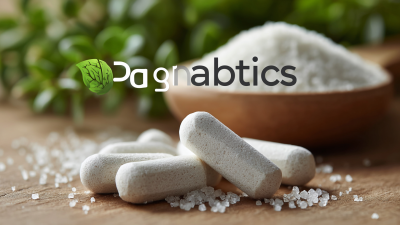
Powder formats may include heat-treated bacterial cells, cell-wall fragments, enzymes, organic acids, or other fermentation-derived compounds. A typical ingredient may arrive as a fine, pale powder in a sealed moisture-barrier pouch. Its quality depends on strain identification, controlled fermentation, drying conditions, and validated testing. Certificate-of-analysis data should cover identity, potency markers, moisture, microbial limits, and contaminants.

Market reports show growing commercial interest. Grand View Research estimated the global postbiotics market at about USD 1 billion in 2023, with continued growth expected through 2030. However, forecasts differ widely. The category is still young. Some projections sound more certain than the clinical evidence allows. Buyers should examine the original studies, not only supplier brochures. Human data also varies by ingredient and dosage. A powder with strong laboratory results may perform differently in a finished food or supplement. That gap deserves attention.

How Postbiotics Powder Is Produced and Standardized

Why Choose Postbiotics Powder for Global Sourcing?

How Postbiotics Powder Is Produced and Standardized

Postbiotics powder begins with a defined microbial strain, controlled substrate, and documented fermentation profile. The ISAPP consensus, published in Nature Reviews Gastroenterology & Hepatology in 2021, defines postbiotics as preparations of inanimate microorganisms and their components. This excludes simple raw culture broth. Manufacturers usually remove cells through filtration or centrifugation, then concentrate metabolites or inactivated biomass. Spray drying improves handling efficiency, but heat may alter sensitive compounds. Freeze drying is gentler, though more expensive.

Standardization starts with identity, not appearance. Each lot should include strain designation, fermentation conditions, moisture, particle size, and marker-compound results. ISO 22000:2018 supports food-safety controls, while ISO/IEC 17025:2017 strengthens laboratory competence. Testing may include microbial limits, heavy metals, residual solvents, and allergen controls. Since viable-cell counts may be irrelevant, suppliers should define potency using measurable chemical or functional markers. Those ranges need scientific justification. A pale, free-flowing powder can still be inconsistent.

Industry market reports released in 2024 commonly forecast high-single-digit annual growth for postbiotics, although estimates vary by product scope. Buyers should request three consecutive certificates of analysis and stability data under intended storage conditions. Check water activity, oxygen protection, and accelerated stability results. For Postbiotics Capsules, powder flow, compressibility, and dose uniformity also require pilot testing. I would not approve a supplier from one attractive laboratory result. Production is controlled science, yet biology remains variable.

What Benefits Support Global Demand for Postbiotics Powder?

Postbiotics powder is gaining attention because global buyers need practical, stable ingredients. Unlike live cultures, postbiotics typically contain inanimate microbial cells or components with documented benefits. This format can simplify storage and transportation. It also reduces concerns about maintaining microbial viability during long shipments. That matters when products cross several climates and customs systems.

Powdered postbiotics fit capsules, sachets, beverages, nutrition bars, and functional foods. Their low moisture content can support better handling and more consistent dosing. Manufacturers may also reduce cold-chain dependence, lowering logistics pressure and potential waste. In development work, this flexibility helps teams adjust serving sizes without redesigning the whole formula. It is not a magic ingredient. Results still depend on strain identity, processing conditions, dose, and the final product matrix.

Global demand also reflects growing interest in evidence-based digestive and immune health concepts. However, responsible sourcing requires more than a technical specification sheet. Buyers should review certificates of analysis, microbial testing, contaminant controls, stability data, and traceability records. Country-specific rules may classify the same ingredient differently. Claims must therefore match available evidence and local requirements. Some suppliers provide limited long-term data, which deserves careful questioning. Reliable procurement combines scientific review, transparent documentation, and realistic expectations. This approach supports safer formulation decisions and more consistent quality across international markets.

Why Choose Postbiotics Powder for Global Sourcing? - What Benefits Support Global Demand for Postbiotics Powder?
Evaluation Dimension Relevant Fact or Data Point Benefit for Global Sourcing Recommended Purchasing KPI
Product Definition Postbiotics are preparations of inanimate microorganisms and/or their components that provide a health benefit to the host. They do not require live microorganisms to remain viable. Products can be formulated without maintaining live-cell viability throughout the supply chain, subject to product-specific stability requirements. Clear postbiotic identity, composition, manufacturing process, and intended use
Storage and Transport Powder products generally contain less free water than liquid products. Lower water availability can support improved physical stability, although the actual result depends on formulation, packaging, and processing. Dry powder formats are suitable for international shipment and can reduce dependence on liquid handling systems. Moisture content, water activity, storage temperature, and transport stability data
Cold-Chain Requirements Unlike conventional live probiotic products, postbiotic powders are not dependent on maintaining viable cell counts during distribution. However, heat, humidity, oxygen, and light may still affect active components. Potentially simpler logistics and broader access to ambient-temperature distribution when supported by stability studies. Validated ambient-storage period and temperature excursion tolerance
Shelf-Life Planning Shelf life must be established using real-time and, where appropriate, accelerated stability studies. There is no single shelf-life value applicable to all postbiotic powders. Reliable stability data help importers plan inventory, reduce expiry risk, and coordinate multi-country distribution. Retest period, expiry period, assay retention, microbiological quality, and packaging integrity
Microbiological Control Postbiotic powders are non-living preparations, but finished products still require control of pathogens, objectionable microorganisms, and contamination during manufacturing. Consistent microbiological specifications improve acceptance by food, supplement, and other regulated-product buyers. Pathogen limits, total microbial counts, batch-release results, and environmental monitoring
Batch Consistency Postbiotic activity can depend on the microorganism, growth conditions, inactivation method, cell components, metabolites, and formulation matrix. Standardized manufacturing and release testing support consistent performance across international purchase lots. Batch-to-batch assay variation, marker-compound profile, identity testing, and certificate of analysis
Formulation Flexibility Powders can be incorporated into dry blends, sachets, capsules, tablets, nutrition products, and selected food applications, subject to local regulations and compatibility testing. One powder format can support multiple finished-product concepts and regional product adaptations. Solubility or dispersibility, hygroscopicity, particle size, flowability, and compatibility data
Manufacturing Scalability Drying, blending, milling, and controlled packaging are established technologies used for many powdered food and nutraceutical ingredients. Process suitability remains product-specific. Established powder-processing infrastructure can support larger production volumes and repeat international orders. Validated process capacity, minimum order quantity, lead time, yield, and change-control procedure
Quality Management HACCP identifies and controls food-safety hazards. ISO 22000 provides a framework for food-safety management systems. These systems do not replace product-specific testing. Recognized quality systems make supplier qualification and cross-border audits more efficient. HACCP plan, ISO 22000 or equivalent certification, audit history, CAPA records, and traceability
Regulatory Adaptability Regulatory classification, permitted claims, labeling rules, and acceptable ingredients can differ by destination market. A health benefit must not be assumed to be authorized in every country. Early regulatory screening reduces customs, labeling, and market-entry risks. Country-specific regulatory assessment, specification dossier, allergen statement, and claim substantiation
Documentation for Importing International buyers commonly require a certificate of analysis, product specification, safety data where applicable, allergen information, origin details, and traceability records. Complete documentation supports customs clearance, quality approval, and distributor onboarding. Document completeness, response time, lot traceability, and certificate accuracy
Packaging Protection Powders may absorb moisture and may be sensitive to oxygen or light depending on their composition. Barrier packaging and suitable desiccant or oxygen-control measures may be necessary. Appropriate packaging helps maintain free-flowing properties, potency, and microbiological quality during long-distance transport. Packaging barrier data, seal integrity, container-closure specification, and transit simulation results
Supply-Chain Risk Risk is influenced by raw-material availability, production-site capacity, transportation routes, regulatory changes, and dependence on a single source. A qualified powder supplier with documented continuity planning can improve resilience for global procurement. Safety-stock policy, alternate raw-material strategy, business-continuity plan, and on-time delivery rate
Evidence and Claims The postbiotic consensus definition emphasizes that a preparation must provide a demonstrated health benefit. Evidence is specific to the preparation, dose, population, and intended use. Evidence-based sourcing supports responsible product development and reduces the risk of unsupported marketing claims. Published research, preparation-specific data, recommended use level, and approved claim wording
Commercial Suitability Powder sourcing enables standardized unit weights, bulk packaging, blending, and scalable contract manufacturing, but total cost depends on specification, testing, packaging, freight, duties, and compliance work. Buyers can compare suppliers using total landed cost rather than ingredient price alone. Total landed cost, yield after processing, testing cost, freight cost, duty exposure, and payment terms
Data note: Postbiotic specifications, stability limits, regulatory status, and health claims are preparation- and market-specific. All numerical quality limits and labeling claims should be confirmed against the product dossier and the regulations of each destination country.

Which Quality Factors Matter in International Sourcing?

Why Choose Postbiotics Powder for Global Sourcing?

Which Quality Factors Matter in International Sourcing?

Postbiotics powder can support flexible international sourcing when quality controls are clear. Buyers should examine the raw material source, production method, and inactivation process. A detailed certificate of analysis should show moisture, microbial limits, active compounds, and contaminant results. Independent laboratory testing adds useful confidence.

Look closely at batch consistency. One pale powder sample proves little. Suppliers should provide reference samples, testing methods, and several recent batch records. Check heavy metals, allergens, pathogens, and residual processing chemicals. Stability data should reflect real shipping conditions, including heat, humidity, and long storage periods. Packaging matters too. Sealed moisture barriers can protect powder during ocean transport.

Traceability must reach the production lot. Ask for manufacturing dates, retention samples, and documented corrective actions. Postbiotics Tablets may require different stability and formulation checks, so powder specifications should not be copied without review. Quality teams should also confirm whether the product meets destination-market requirements. Regulatory documents can vary between countries.

No supplier file is perfect. That is worth remembering. A polished dossier may still hide weak sampling practices. An audit should include warehouse conditions, calibration records, and employee hygiene procedures. I would also compare test results from two laboratories when the material is expensive or highly sensitive. Small gaps deserve questions, not assumptions.

How Postbiotics Powder Fits Global Supply Chains

Why Choose Postbiotics Powder for Global Sourcing?

How Postbiotics Powder Fits Global Supply Chains

Postbiotics powder can simplify international ingredient planning. Its non-viable microbial components often support easier handling than live cultures. This may reduce concerns about survival during routine transport. However, stability still depends on moisture, heat, packaging, and storage time.

A practical sourcing review should begin with clear specifications. Check identity, active markers, moisture limits, microbial safety, heavy metals, and allergen statements. Request batch records and a certificate of analysis for every shipment. Traceable lot numbers matter when products cross several borders. They connect the factory, warehouse, customs file, and finished formulation.

Keep it dry.

Supply chains also need suitable packaging. High-barrier bags, sealed drums, and desiccants can protect powder during humid voyages. Temperature monitoring may be useful for long routes. Import documents should match the product description and local requirements. Rules differ between food, supplement, cosmetic, and other applications. Confirm claims with qualified regulatory professionals before publishing them.

Supplier audits can reveal practical details that a brochure misses. Inspect sampling procedures, cleaning controls, recall plans, and change-notification systems. Cost alone is a weak decision tool. A cheaper material may create delays through inconsistent testing or unclear documentation. Postbiotics powder is not ideal for every formula, either. Some applications still require live microorganisms or different delivery formats. That limitation deserves honest review.

Why Choose Postbiotics Powder for Global Sourcing?

How Postbiotics Powder Fits Global Supply Chains

Postbiotic powders can simplify international distribution because they do not require live microorganisms to remain viable during transport. When product-specific stability data support it, controlled-room-temperature logistics can reduce dependence on refrigerated shipping. The temperature bands shown are commonly used pharmaceutical and food-supplement handling references; the final storage specification must be validated for each formulation and package.

Reference framework: USP Packaging and Storage Requirements and the ISAPP consensus definition of postbiotics.

What Should Buyers Consider Before Selecting a Supplier?

Why Choose Postbiotics Powder for Global Sourcing?

What Should Buyers Consider Before Selecting a Supplier?

Selecting a postbiotic supplier requires more than comparing prices. Buyers should verify the production process, ingredient identity, and batch consistency. Ask for a current certificate of analysis for every lot. It should show potency, moisture, microbial limits, and contaminant testing. Postbiotics Granules may also require particle-size data for smooth blending and packaging. Small details matter.

Traceability is essential. A reliable supplier should explain raw material origins, processing controls, storage conditions, and transport practices. Request stability data for the intended climate and packaging format. Heat, humidity, and long shipping routes can affect product performance. A clear change-control procedure is equally important. Suppliers should notify buyers before altering materials, equipment, or specifications.

Documentation should match the target market. Check manufacturing certificates, allergen statements, technical specifications, and regulatory support documents. Sample testing is useful, but one successful sample proves little. Review several production batches when possible. A polished sales sheet can still hide weak consistency. That is a hard lesson.

Commercial terms deserve careful attention too. Confirm minimum order quantities, lead times, payment conditions, and replacement policies. Ask how complaints are investigated and how quickly corrective actions are provided. A supplier that answers difficult questions directly is often more dependable. Silence is a warning sign. Buyers should also assess communication quality during the first few discussions, because global sourcing depends on accurate, timely information.

FAQS

What are postbiotics powder products?

They contain inanimate microorganisms, microbial components, or beneficial fermentation-derived metabolites. They do not require live cells. A sealed moisture-barrier pouch may hold a fine, pale powder.

How do postbiotics differ from probiotics?

Probiotics contain living microorganisms, while postbiotics do not depend on live cells. This may simplify storage, transport, and formulation. It does not guarantee equal performance.

What ingredients may appear in postbiotics powders?

Products may include heat-treated cells, cell-wall fragments, enzymes, organic acids, or other fermentation compounds. The exact composition depends on the production process and selected microorganism.

What quality information should buyers request?

Request a current certificate of analysis for every production lot. It should cover identity, potency markers, moisture, microbial limits, and contaminants. Small details matter.

Why are stability and packaging important?

Heat, humidity, and long shipping routes can affect powder performance. Ask for stability data covering the target climate and packaging format. A dry warehouse helps.

What should buyers check about a supplier’s traceability?

Suppliers should explain raw material origins, fermentation controls, drying conditions, storage, and transport practices. They should also describe change-control procedures. Unexpected changes create risk.

Is one successful sample enough for supplier approval?

No. One sample proves very little about long-term consistency. Review several production batches when possible, including particle-size data for blending. I may be too cautious, but consistency matters.

How should buyers evaluate research and market forecasts?

Examine original human studies, ingredient identity, dosage, and finished-product results. Laboratory findings may not match performance in foods or supplements. Forecasts can sound precise, perhaps too precise.

Which commercial terms deserve attention?

Confirm minimum order quantities, lead times, payment conditions, and replacement policies. Ask how complaints are investigated and corrective actions are delivered. Silence is a warning sign.

Conclusion

Postbiotics Powder refers to carefully prepared powders containing beneficial non-living microbial components, metabolites, or fermentation-derived compounds. Compared with live cultures, these products can offer greater stability and simpler handling, making them suitable for functional foods, dietary supplements, and other wellness-oriented applications. Production typically involves controlled fermentation, separation, drying, and standardized testing to help maintain consistent composition, moisture levels, potency, and microbiological safety from batch to batch.

For international buyers, the appeal of Postbiotics Powder lies in its convenient storage, transportation efficiency, and compatibility with diverse product formulations. However, successful global sourcing depends on more than price. Buyers should evaluate raw material traceability, manufacturing controls, analytical documentation, stability data, packaging protection, minimum order quantities, lead times, and supplier communication. Clear specifications and independent quality verification can reduce supply risks and support reliable product development across different markets. Selecting a supplier with transparent processes and consistent documentation is therefore essential for building a dependable and scalable supply chain.

Sophie

Sophie

Sophie is a dedicated professional marketer at Zhongchuang Yike (Shanghai) Health Technology Co., Ltd., where her expertise plays a crucial role in promoting the company’s innovative health products. With a profound understanding of the health technology industry, Sophie consistently updates the......
Previous China Top Vegetable Fermentation Starter Suppliers?