You know, when it comes to food production, the role of starter cultures and fermentationreally can't be emphasized enough. China’s definitely stepped up as a major player in offering top-notch fermentation solutions and Starter Cultures. Companies like Anhui Jinhe Industrial Co., Ltd. and Danstar Ferment AG? They've really made a mark, setting pretty high standards for quality and innovation.
Getting a good grasp of starter cultures is super important, especially for buyers all over the world. There’s such a wide variety of bacterial and yeast strains that it can really influence how your fermented foods taste and feel. But let’s be honest — navigating this whole scene can be pretty tricky. Buyers need to think about things like what they’re making and what kind of final product they want. Some suppliers might promise the moon — great results every time — but sometimes, that’s not exactly what you get. Inconsistent quality can be a real letdown and can waste either time or resources.
Even well-established companies aren’t immune to the challenge of meeting each customer’s unique needs. Fermentation’s a pretty complex process, and surprises can pop up from time to time. That’s why it’s so important for buyers to keep the communication flowing with their suppliers — it’s all about tweaking and optimizing. Investing in solid, reliable starter cultures and fermentation solutions really is the smart move if you want to stay competitive and succeed in this game.
China's Rise in the Global Starter Culture Market
China has rapidly become a key player in the global starter culture market. The country's investment in biotechnology and fermentation research has significantly enhanced its capabilities. This growth is noticeable in the production of Fermentation Starter Culture, which meets diverse international needs. Chinese manufacturers are adopting advanced fermentation techniques, leading to improved product quality and consistency.
However, challenges remain. While many Chinese companies excel in production, some still struggle with global standards. Ensuring product reliability and safety is essential for maintaining international trust. Additionally, the competitive landscape is shifting. Countries with established starter culture markets respond with innovation and higher quality products. This may pressure Chinese manufacturers to continually improve.
Collaboration and partnerships are vital. Chinese firms are engaging with international experts to refine their processes. Such efforts can foster growth in the Fermentation Starter culture sector. As these relationships develop, China’s influence in the global market is likely to expand. The journey is ongoing, presenting both opportunities and hurdles for the nation.
China's Rise in the Global Starter Culture Market
This chart demonstrates the growth of China's market share in the global starter culture sector from 2018 to 2023. The data reflects the increasing demand for fermentation solutions and starter cultures, highlighting China's significant role in this industry.
Key Types of Starter Cultures Produced in China
China is renowned for producing various starter cultures that cater to diverse fermentation needs. The range includes lactic acid bacteria, yeasts, and molds. Each type plays a significant role in different food applications. For example, lactic acid bacteria are crucial for yogurt, cheese, and pickles. Their ability to convert sugars into lactic acid helps preserve food and develop flavors.
Yeast cultures are vital in bread and alcoholic beverage production. They ferment sugars, releasing carbon dioxide and alcohol. These cultures influence the texture and taste of products. Molds, particularly in Chinese fermented foods, contribute unique flavors and aromas. They are essential in products like soy sauce and fermented tofu.
While China's starter cultures present great opportunities, challenges remain. Quality control can vary among manufacturers. Reliable sourcing is necessary for consistent results. Buyers should focus on suppliers with proven expertise. Optimal fermentation requires careful selection of culture types. Caldwell Fermentation Starter exemplifies a quality resource for those seeking reliable fermentation solutions.
Fermentation Techniques Unique to Chinese Manufacturers
Chinese manufacturers are renowned for their unique fermentation techniques. These methods are deeply rooted in the country’s rich culinary traditions. Fermentation here is not just a process; it’s an art form. Each technique varies, delivering distinct flavors that are sought by global buyers.
One notable method is the use of specialized starter cultures. These cultures are often locally sourced, nurturing specific microorganisms that thrive in China's diverse climates. Fermentation can take days or even weeks, allowing complex flavors to develop. Techniques such as submerged fermentation and solid-state fermentation offer unique profiles. However, achieving consistency can be challenging, and some manufacturers struggle to scale these artisanal practices for mass production.
Another interesting aspect is the connection to local ingredients. Chinese fermentation heavily relies on regional crops, which can lead to variations in taste and texture. This reliance also raises questions about sustainability and sourcing. As Chinese manufacturers aim for global reach, finding the right balance between tradition and modern efficiency remains an ongoing journey. The challenge lies in marrying age-old practices with contemporary demand while ensuring quality and safety.
Quality Control and Standards in Chinese Fermentation Products
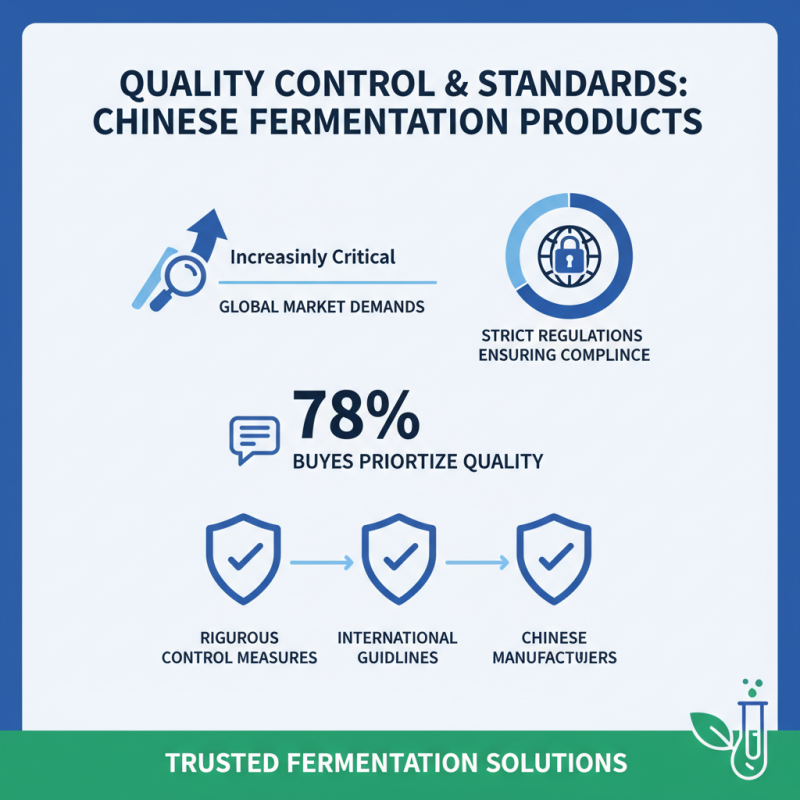
Quality control in Chinese fermentation products has become increasingly critical. In a global market characterized by strict regulations, ensuring compliance is essential. Reports show that about 78% of buyers emphasize quality standards when selecting fermentation solutions. Chinese manufacturers are implementing rigorous control measures in line with international guidelines.
For instance, many firms are investing in advanced testing technologies. These include spectrometry and chromatography, which help to identify microbial strains accurately. However, inconsistencies still arise. Some smaller producers struggle with adherence to quality standards, leading to variations in product outcomes. This raises concerns for international buyers.
Moreover, transparency in sourcing is vital. A recent survey indicated that 65% of buyers prefer suppliers who disclose raw material sources. This trend highlights a shift towards accountability in the fermentation industry. While large-scale manufacturers often meet these expectations, smaller enterprises may not have the same resources. This discrepancy necessitates ongoing efforts to standardize quality controls across the board.
Global Demand Trends for Chinese Fermentation Solutions
The global demand for Chinese fermentation solutions is on the rise. Recent studies indicate that the fermentation industry is expected to reach over $600 billion by 2025, with a compound annual growth rate (CAGR) of 6.5%. This surge is driven by the increasing popularity of probiotic foods and beverages. China plays a pivotal role, leveraging its vast agricultural resources and expertise in fermentation technology.
Chinese starter cultures are particularly sought after for their versatility. They cater to various sectors, including dairy, beverages, and plant-based products. The fermentation process enhances flavor, texture, and nutritional value. Data shows that the dairy sector alone is projected to grow by 4% annually. However, producers face challenges such as consistency and quality control. These issues can impact the end product and consumer satisfaction.
Additionally, environmental sustainability has become a key concern. Many producers are exploring eco-friendly fermentation methods. Reports suggest that consumers prefer products with transparent sourcing and minimal additives. While Chinese fermentation solutions offer innovation, the industry must address these evolving consumer trends. The focus should be on producing high-quality, sustainable solutions that meet global standards.
Challenges Faced by China's Starter Culture Industry
The starter culture industry in China faces several challenges. The demand for Fermentation Starters is growing, yet production hurdles persist. A 2022 report by IBISWorld highlighted that over 30% of Chinese firms reported difficulties in maintaining consistent quality. This inconsistency can lead to product recalls, which affect not only brands but also consumer trust.
Recent market analyses reveal that the competition is intensifying. With international players entering the Chinese market, local producers must enhance their production techniques. Data from Statista shows that the global fermentation starter market is projected to grow at a CAGR of 5.7% by 2026, increasing pressure on China to keep pace. Adapting to new trends like plant-based sourcing is crucial, yet many producers are slow to innovate.
Tips: Investing in R&D can help companies improve their fermentation starter quality. Collaborating with universities can provide insights into modern practices. Companies must also focus on sustainability to remain competitive in a conscious market. Continuous learning is vital to overcoming industry barriers.
Future Prospects for China's Fermentation Solutions Globally
As global demand for fermented products rises, China's fermentation solutions are poised for growth. Recent reports indicate that the global fermentation market is projected to reach $657 billion by 2028, growing at a CAGR of 9.1%. This surge is driven by an increasing trend towards probiotic consumption and health benefits. Chinese manufacturers are adapting to meet these international needs, particularly in Vegetable Fermentation Starter production.
Chinese companies have been enhancing their fermentation techniques. Many focus on organic and natural ingredients, aligning with consumer preferences. However, the industry still faces challenges. Quality control can be inconsistent among smaller producers, potentially affecting product reliability. Implementing strict quality standards is crucial for long-term success. Additionally, the diverse tastes of global consumers complicate product standardization.
Investments in research and development are beginning to address these issues. Improved starter cultures that cater to varied palates are on the rise. Companies are also exploring innovative packaging options that extend shelf life. As China continues to refine its fermentation solutions, it holds significant potential to become a leader in the global market. However, careful navigation of these challenges will determine its future trajectory.
Exploring the Connection Between Emotions, Sleep Quality, and Probiotic Interventions
The connection between emotions, sleep quality, and probiotic interventions has garnered increasing attention in recent research. It is well established that emotional well-being significantly influences sleep patterns; individuals experiencing high levels of anxiety or stress often report difficulties falling asleep or maintaining restful sleep. This is where Probiotics can step in as a potential intervention. Emerging studies suggest that the gut-brain axis plays a crucial role in regulating mood and, consequently, sleep quality. By incorporating probiotics into one’s diet, individuals might improve their emotional state, which in turn could lead to better sleep.
Probiotic interventions can offer a dual benefit. Not only can they potentially enhance emotional balance, but they can also directly influence sleep quality. Certain strains of probiotics have been shown to reduce anxiety and stress, fostering a more relaxed state conducive to sleep. This holistic approach highlights the importance of gut health in maintaining emotional stability and promoting restorative sleep. As individuals seek natural solutions to support their mental and physical health, exploring the benefits of probiotics could be a valuable avenue for those struggling with sleep disturbances linked to emotional issues. Through further exploration and implementation of dietary probiotics, people may find a pathway toward improved sleep and emotional well-being.
FAQS
: China's investment in biotechnology and fermentation research has driven significant growth in the starter culture market.
Chinese fermentation solutions are popular in dairy, beverages, and plant-based products. They enhance flavor and nutritional value.
Some Chinese manufacturers struggle with consistency and quality control, affecting consumer satisfaction and product reliability.
Global demand is projected to exceed $600 billion by 2025, with a growth rate of 6.5%. Probiotics are driving this trend.
Consumers increasingly prefer products with transparent sourcing and minimal additives, emphasizing the need for sustainability.
Many firms are collaborating with international experts to refine processes and improve product quality for global markets.
Environmental sustainability is crucial as consumers seek eco-friendly products, prompting producers to adopt greener fermentation methods.
Established markets respond with innovation, pressuring Chinese manufacturers to improve their techniques and maintain quality.
The dairy sector is projected to grow by 4% annually, highlighting the importance of quality in fermentation processes.
Producers must prioritize high-quality and sustainable solutions that comply with evolving global standards.
Conclusion
China has emerged as a significant player in the global starter culture and fermentation market, showcasing a diverse range of products and innovative techniques. The country specializes in various starter cultures, including those for dairy, soy, and alcoholic beverages, leveraging unique fermentation methods that highlight traditional practices alongside modern advancements. Quality control and adherence to standards are paramount, ensuring that Chinese fermentation solutions meet international demands.
Despite facing challenges such as competition and resource limitations, the future prospects for China's starter culture and fermentation industry remain optimistic. As global demand for fermented products continues to rise, Chinese manufacturers are well-positioned to expand their influence and cater to international markets, contributing to the evolving landscape of fermentation solutions worldwide.