Leave Your Message
0%

Hey there! So, let's talk about the big buzz around Coconut Yoghurt Starters, especially from top Chinese suppliers. These days, more people are jumping on the plant-based dairy bandwagon, and that means the demand for high-quality coconut yoghurt starters is pretty much skyrocketng. Folks want that creamy texture, just the right touch of acidity, and cultures that are gentle on digestion—and manufacturers, of course, can't just rely on snazzy packaging to stand out. They need starters that control fermentation well, clear info on strains, and consistent results every time.

Food microbiologist Dr. Marco Gobbetti points out something pretty important: *“Choosing the right starter kit really affects the flavor, texture, and how steady the fermentation process is.”* This is especially true when it comes to coconut-based yoghurt. Since coconut cream doesn’t have as much protein as dairy milk, it reacts differently during acidification. So, a good coconut yoghurt starter—check out this Coconut Yoghurt Culture Starter—has to work well with the product's fat content, solids, sugar levels, and the temperatures you use during processing. Small tweaks can totally change how thick or runny your yoghurt turns out.

When you're choosing a reliable Chinese supplier, make sure they can provide documented strain IDs, recommended doses, proper storage info, and batch testing results. Technical support is a big plus—they should be willing to help adjust things like fermentation times, cooling rates, and stabilizer compatibility. All these little details actually show up inside the factory. Like, a cup that seems perfect in the shop might turn watery after chilling, or a nice aroma might become too sharp if fermentation goes longer than planned. Honestly, no starter is perfect for every recipe, so testing is key, and being pretty honest about it really helps.

This guide walks you through how Chinese companies develop, test, and supply coconut yoghurt starters for commercial production. It covers lab controls, pilot runs, packaging quality, and how they handle export and communication. Just a heads-up: before you make a move, double-check the certificates, specs, and compliance with your local laws. You gotta trust the evidence behind those claims—marketing talk alone won’t cut it. Building a solid partnership means sampling, keeping records, and running repeats to make sure everything’s consistent.

All in all, choosing the right culture isn’t just about finding the cheapest option; it’s about reliable quality, good support, and honest testing. That’s what really makes the difference in the long run.
China Top Coconut Yoghurt Starter Supplier Manufacturer

Coconut Yoghurt Starter: Definition and Core Functions

Coconut yoghurt starter is a carefully selected culture blend used to ferment coconut-based yoghurt. It usually contains lactic acid bacteria that convert available sugars into organic acids. This lowers the pH and creates the familiar tangy taste. It is not a magic powder.

In practical production, the starter performs several core functions. It guides acid development, supports a cleaner flavour, and helps create a stable yoghurt-like body. Some cultures produce natural polysaccharides, which may improve thickness and reduce watery separation. The final texture still depends on coconut solids, stabilizers, heat treatment, and fermentation temperature. Culture choice alone cannot solve every formulation problem.

A reliable manufacturer should control strain identity, activity, moisture, contamination risks, and storage conditions. Small changes can affect fermentation speed and flavour. For example, an overheated coconut base may weaken the culture before inoculation. Excess sugar may also change the fermentation balance. Operators should verify pH, temperature, incubation time, and sensory quality in each batch. A target pH is useful, but it should not replace microbiological testing and process records. Some batches may look perfect yet taste flat. That result deserves investigation, not guesswork. Starter performance should be evaluated in the customer’s actual coconut formulation, because laboratory results may not fully reflect commercial production.

Why Choose a Chinese Coconut Yoghurt Starter Manufacturer

Why Choose a Chinese Coconut Yoghurt Starter Manufacturer

A Chinese Coconut Yoghurt Starter manufacturer can offer practical production advantages. Many suppliers work with food technologists and controlled fermentation rooms. They can provide Starter Cultures for coconut milk, oat milk, and other plant-based liquids. Experienced teams usually test acidity, fermentation time, texture, and microbial stability. These checks matter when coconut milk varies between batches. A reliable manufacturer should also provide clear specifications, batch records, and storage instructions. Ask for samples before making a large order. Small trials reveal more than attractive product pages.

Tips: Check the recommended inoculation rate, temperature, and shelf life. Confirm whether cold-chain shipping is required. Request recent testing documents and production details. Keep a sample batch for comparison.

Cost is another reason buyers consider China. Established factories may combine laboratory support, flexible packaging, and scalable production. Some can adjust culture strength for a thicker spoon texture or milder sourness. Communication can still be imperfect. Time zones, translation, and changing coconut ingredients may create delays. That is why written specifications and pilot testing are essential. Choose a supplier that answers technical questions clearly, not one that promises everything. Good cooperation grows from evidence, consistent records, and honest feedback.

Key Ingredients and Fermentation Characteristics

China Top Coconut Yoghurt Starter Supplier Manufacturer
Key Ingredients and Fermentation Characteristics

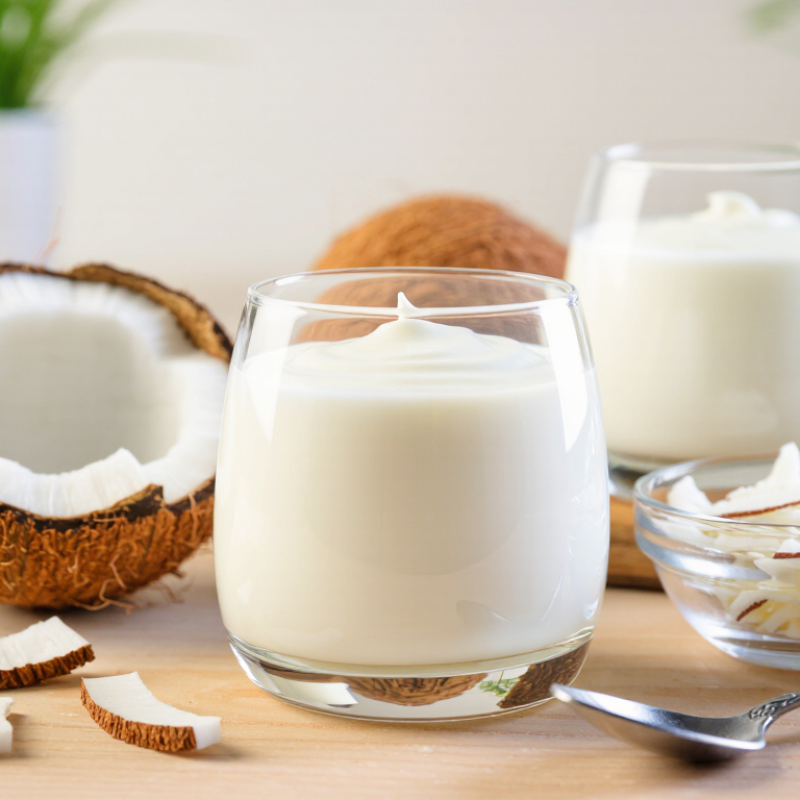
Coconut yoghurt begins with coconut milk or cream, water, and selected live cultures. Coconut provides fat, but very little protein. This can create a soft, unstable gel. Pectin, tapioca starch, or rice starch may improve body. Calcium salts can support nutrition, while sugar must remain controlled. Grand View Research reported strong growth in the global plant-based yoghurt market through 2024, reflecting rising demand for dairy-free fermented foods.

Fermentation usually performs well between 36°C and 42°C. Many cultures acidify the mixture toward pH 4.2–4.6. This range supports a clean tang and safer processing control. Fermentation may take six to twelve hours, depending on culture strength and solids content. The Codex Alimentarius standard for fermented milks emphasizes viable microorganisms and controlled acidity. Coconut yoghurt needs extra attention because its fat phase can separate during cooling. A practical pilot lesson is simple: laboratory results may not match factory results. Agitation, raw material age, and filling temperature can change the texture.

Tips: Homogenize the coconut base before inoculation. Use calibrated pH meters, not taste alone. Chill quickly after reaching the target acidity. Check viscosity after 24 hours, because the final structure often develops slowly. A small batch trial is worth repeating.

How to Select a Reliable Coconut Yoghurt Starter Supplier

China Top Coconut Yoghurt Starter Supplier Manufacturer

How to Select a Reliable Coconut Yoghurt Starter Supplier

Selecting a reliable Coconut Yoghurt Starter Culture supplier requires more than comparing prices. Check the culture’s strain identity, recommended dosage, fermentation temperature, and expected pH range. A professional supplier should provide current certificates of analysis, batch numbers, production dates, and clear storage instructions. Ask for proof.

Request a small sample before placing a large order. Test it with your actual coconut base, including its fat content, sugar level, and stabilizers. Record fermentation time, aroma, texture, acidity, and separation after refrigeration. Taste matters. A culture that performs well in soy milk may behave differently in coconut cream. Small tests reveal problems.

Reliable manufacturers explain their quality controls without avoiding technical questions. They should describe microbial testing, lot traceability, packaging protection, and cold-chain requirements when needed. Check whether their documents match the shipped product. Communication also matters; delayed answers can become costly during production. I have found that suppliers often provide impressive specifications, yet their practical guidance remains too general. This is worth challenging politely. Ask how they handle inconsistent batches, transport delays, and changes in raw materials. A dependable partner welcomes these questions and helps adjust the process, rather than promising identical results in every kitchen.

Production, Quality Control, and Food Safety Standards

China Top Coconut Yoghurt Starter Supplier Manufacturer

Production, Quality Control, and Food Safety Standards

A dependable Coconut Yoghurt Culture supplier controls more than fermentation speed. Production begins with traceable coconut substrates, verified nutrients, and purified process water. Each batch receives a coded identity before blending. Operators monitor temperature, acidity, mixing time, and inoculation levels. Small changes can alter texture, aroma, and live culture performance. The target is consistent fermentation, not merely a sharp sour taste. Plant records should connect every pouch to its raw materials and test results.

Quality control needs evidence at several points. Laboratories check identity, purity, moisture, microbial counts, and activity during shelf-life studies. Finished cultures should meet agreed specifications for pathogens and unwanted microorganisms. Codex General Principles of Food Hygiene, CXC 1-1969, supports hazard-based controls and documented verification. ISO 22000:2018 also requires a structured food safety management system. The WHO and FAO estimate that contaminated food causes about 600 million illnesses and 420,000 deaths annually. Food safety is not a final inspection.

It is built into every step.

In practical production, sealed areas, calibrated instruments, and controlled cold storage reduce avoidable variation. Staff hygiene checks should happen before handling starter materials. Retained samples help investigate swelling, weak acidification, or unexpected odor. No process is perfect. A responsible manufacturer records failures, studies root causes, and improves the next batch. That honest review can matter more than polished sales language.

Packaging, Customization, and Global Supply Capabilities

Packaging, Customization, and Global Supply Capabilities

A reliable coconut yoghurt starter supplier must understand production beyond the powder itself. Our Coconut Milk Yogurt Starter Culture is packed for moisture control and handling stability. Inner sachets use food-grade barrier materials. Outer cartons protect them during warehouse movement and overseas transport.

Packaging can match different production scales. Small sachets suit pilot batches and retail sampling. Larger bags reduce handling time in commercial facilities. Labels may include batch numbers, storage conditions, dosage guidance, and production dates. We also support customized carton dimensions and language layouts, subject to packaging review. A clear label prevents avoidable mistakes.

Global supply requires more than shipping a product. We check batch records, packing lists, commercial invoices, and destination requirements before dispatch. Temperature-sensitive arrangements are assessed when needed. Dry storage is still essential. It is often overlooked.

Our technical team can discuss fermentation temperature, culture dosage, acidity targets, and coconut base differences. These details affect texture, aroma, and consistency. Trial samples help confirm performance before larger orders. Not every formula behaves identically. Coconut fat content can change the fermentation curve, so practical testing remains necessary.

We coordinate production schedules around forecast quantities and packaging approvals. This helps reduce delays caused by last-minute artwork changes. Standard products usually move faster, while customized formats require additional checks. Lead times can shift during peak periods. Honest communication matters more than promising an unrealistic delivery date.

China Top Coconut Yoghurt Starter Supplier Manufacturer - Packaging, Customization, and Global Supply Capabilities

Data Dimension Typical Specification or Capability Practical Details
Product Type Freeze-dried yoghurt starter culture Designed to ferment coconut milk and other plant-based substrates after suitable formulation and heat treatment.
Culture Composition Lactic acid bacteria, used individually or in defined blends Common yoghurt-related genera include Streptococcus and Lactobacillus; the final culture selection depends on the target acidity, texture, and fermentation time.
Application Coconut yoghurt, plant-based yoghurt, and dairy-free fermented desserts Performance varies with coconut solids, sugar level, stabilizers, heat treatment, inoculation rate, and incubation conditions.
Physical Form Fine, free-flowing powder Low-moisture powder is commonly used to improve culture stability and simplify measured dosing.
Primary Packaging Aluminum-laminated sachet, foil pouch, or sterile vial Moisture- and oxygen-barrier packaging helps protect freeze-dried cultures during storage and transport.
Common Pack Sizes Single-use sachets, multi-dose pouches, and bulk containers The appropriate fill weight is determined by culture potency, batch size, and the recommended inoculation dosage.
Packaging Customization Pack size, sachet format, outer carton, label language, and artwork Customized packaging should be confirmed against minimum order quantities, food-contact requirements, and local labeling rules.
Storage Condition Cold-chain storage is generally preferred The exact temperature range and shelf life must follow the product specification and stability data supplied for the batch.
Shelf-Life Control Lot-specific expiry date and viability specification Shelf life is verified through stability testing, packaging-barrier evaluation, and viable-cell or activity testing.
Quality Testing Identity, purity, moisture, microbiological safety, and culture activity Testing requirements should be agreed before production and documented in the batch certificate or quality dossier.
Customization Options Culture blend, acidity profile, fermentation speed, and format Customization normally requires application trials using the customer’s coconut base and processing conditions.
Application Support Fermentation protocol and product-development guidance Support may cover inoculation, incubation, cooling, pH monitoring, texture adjustment, and pilot-scale validation.
Export Documentation Commercial invoice, packing list, certificate of analysis, and transport documents Additional documents may include certificates of origin, health certificates, allergen statements, and non-GMO or vegan declarations when applicable.
Global Shipping Air freight, refrigerated logistics, or validated temperature-controlled shipping The shipping method should reflect destination regulations, transit duration, packaging validation, and the required storage condition.
Target Customers Food manufacturers, private-label producers, distributors, and R&D laboratories Suitable supply models may include samples, pilot quantities, regular commercial orders, and contract manufacturing support.
Compliance Review Destination-market food regulations and labeling requirements Import eligibility, permitted microorganisms, claims, allergen status, and language requirements should be checked before commercial shipment.

Note: Specifications, storage conditions, shelf life, dosage, and documentation depend on the selected culture formulation and destination-market requirements and should be confirmed in the applicable technical data sheet.

Yo-ZC458 Yogurt Starter Culture: Gut Health Trends Cited by Grand View Research and Fortune Business Insights

Growing interest in gut health is shaping consumer choices in the functional food market. Trends cited by Grand View Research and Fortune Business Insights point to stronger demand for probiotic products that support digestive wellness, immunity, and everyday nutrition. Yogurt starter culture offers a convenient way to respond to this trend at home. Sourced from trusted suppliers in China, this high-quality culture contains beneficial microorganisms, including Lactobacillus and Bifidobacterium, which help maintain a balanced intestinal environment and discourage the growth of harmful bacteria.

Yogurt prepared with this culture may also support the digestion and absorption of nutrients such as calcium and magnesium, contributing to healthy bones. Regular consumption can complement a balanced diet by supporting cholesterol management, cardiovascular wellness, and weight-control goals. The lactic acid bacteria can break down part of the lactose in milk during fermentation, making homemade yogurt more comfortable for some people with lactose sensitivity. With a reliable yogurt fermenter and simple preparation steps, families can enjoy fresh yogurt while adding active probiotics to their daily eating habits.

FAQS

What ingredients are used in coconut yoghurt?

Coconut milk or cream, water, and live cultures form the base. Coconut adds fat but little protein. Pectin or starch may improve firmness.

What fermentation temperature works best?

Fermentation commonly performs between 36°C and 42°C. The exact setting depends on culture strength and coconut solids. Small trials help.

How long does fermentation usually take?

Fermentation may require six to twelve hours. Monitor acidity instead of relying only on time. Raw materials can change the fermentation speed.

What pH range is commonly targeted?

Many cultures reach approximately pH 4.2–4.6. This range supports a clean tang and controlled processing. Use a calibrated pH meter.

Why can coconut yoghurt separate after cooling?

Coconut fat may separate from the water phase. Weak protein structure can also create a soft gel. Homogenize before adding the culture.

How can texture improve after fermentation?

Chill the yoghurt quickly after reaching the target acidity. Check viscosity again after 24 hours. The structure may develop slowly.

How should a starter culture supplier be evaluated?

Check strain identity, dosage, temperature, pH range, batch number, and production date. Request current analysis documents. Ask direct questions.

Should a sample be tested before a large order?

Yes. Test the culture with your actual coconut base, sugar level, fat content, and stabilizers. Record aroma, texture, acidity, and separation.

What packaging details matter for starter cultures?

Moisture-resistant inner sachets help protect the powder. Labels should show batch numbers, storage conditions, dosage, and production dates. Clear labels prevent mistakes.

Can every coconut yoghurt formula produce identical results?

Not always. Fat content, agitation, transport delays, and filling temperature can change the result. Laboratory performance may not match factory performance. That deserves attention.

Conclusion

Coconut Yoghurt Starter is a specialized culture blend designed to ferment coconut-based milk into a smooth, tangy, and stable yoghurt alternative. It typically contains selected beneficial microorganisms that support consistent acid development, pleasant flavor, and improved texture while working effectively in plant-based formulations. Compared with conventional dairy fermentation, coconut yoghurt production requires careful control of culture activity, fat content, solids, temperature, and fermentation time to achieve reliable results.

Choosing an experienced Chinese Coconut Yoghurt Starter manufacturer can provide flexible product options, competitive production capacity, and support for different recipes and market requirements. A reliable supplier should offer clear ingredient specifications, stable batch performance, documented quality control, and compliance with applicable food safety standards. Attention should also be given to hygienic production, microbial testing, shelf-life evaluation, packaging formats, private customization, and export capabilities. With professional technical support and dependable logistics, manufacturers can help customers develop safe, consistent, and market-ready coconut yoghurt products for various regions.


Clara

Clara

Clara is a dedicated marketing professional at Zhongchuang Yike (Shanghai) Health Technology Co., Ltd., where she leverages her extensive expertise to enhance the company's outreach and educate stakeholders about its innovative health solutions. With a keen understanding of the healthcare market,......
Previous China Top Probiotic Solid Drinks Suppliers?